SHORT TRACK
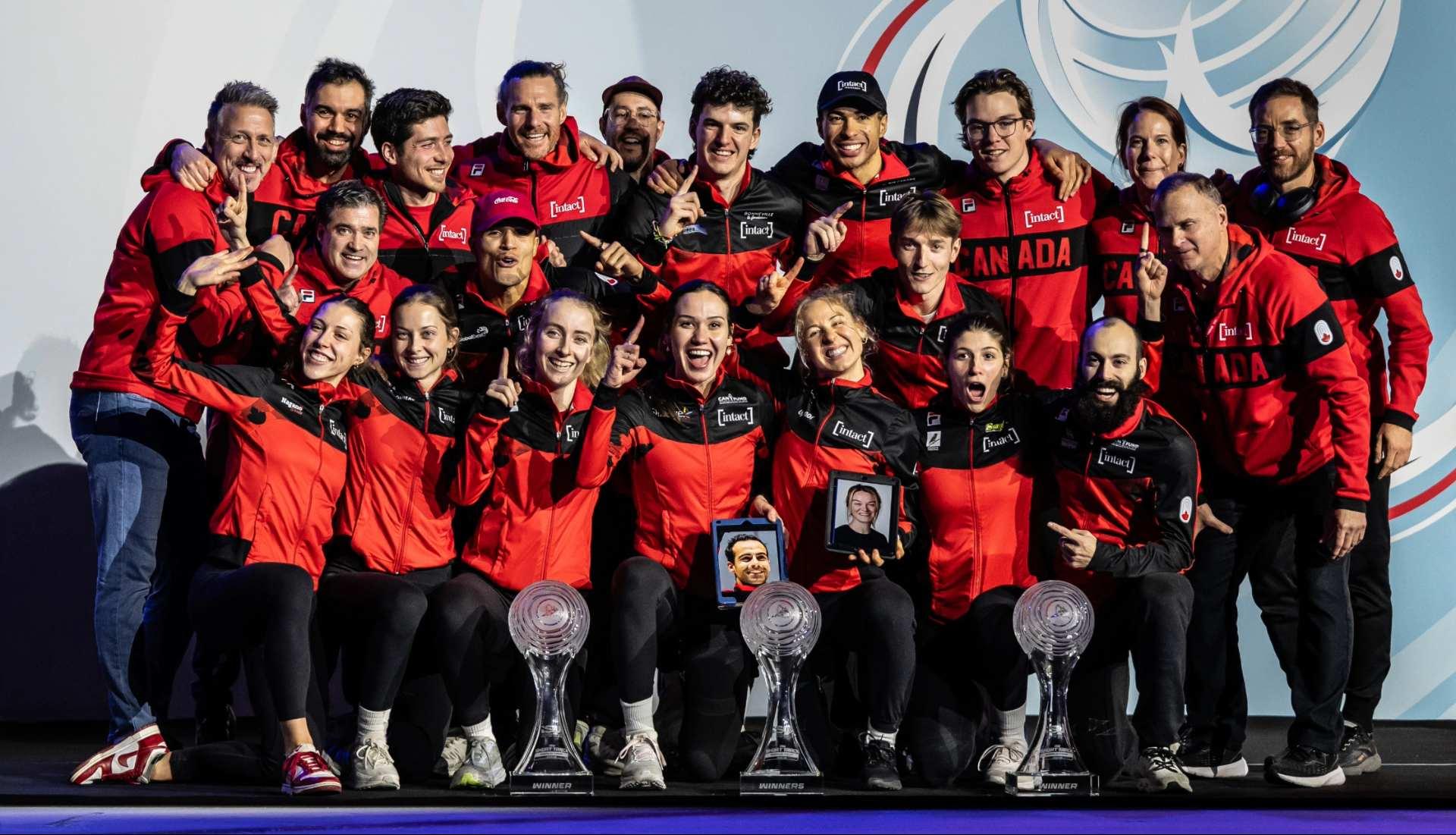
Inside the Canadian Short Track winning machine
05 Dec 2025
There’s a palpable excitement around Team Canada at the moment.
Their nation has always been a strong international performer, without ever quite being ‘the best’. At the nine previous Olympics, they’ve finished second in the Short Track medal table twice, third twice, and fourth on four occasions. At Beijing 2022, they ranked fifth.
They hurtle towards the Milano Cortina 2026 Olympic Winter Games, however, on top of the world. William Dandjinou is the winner of the last two men’s ISU Crystal Globes and Courtney Sarault has just completed an extraordinary return to form to lift her first title.
Steven Dubois and Kim Boutin are World Champions. Skaters like Felix Roussel, Jordan Pierre-Gilles, Maxime Laoun, Florence Brunelle, Danae Blais and Rikki Doak are claiming podiums. They have a squad depth like never before.
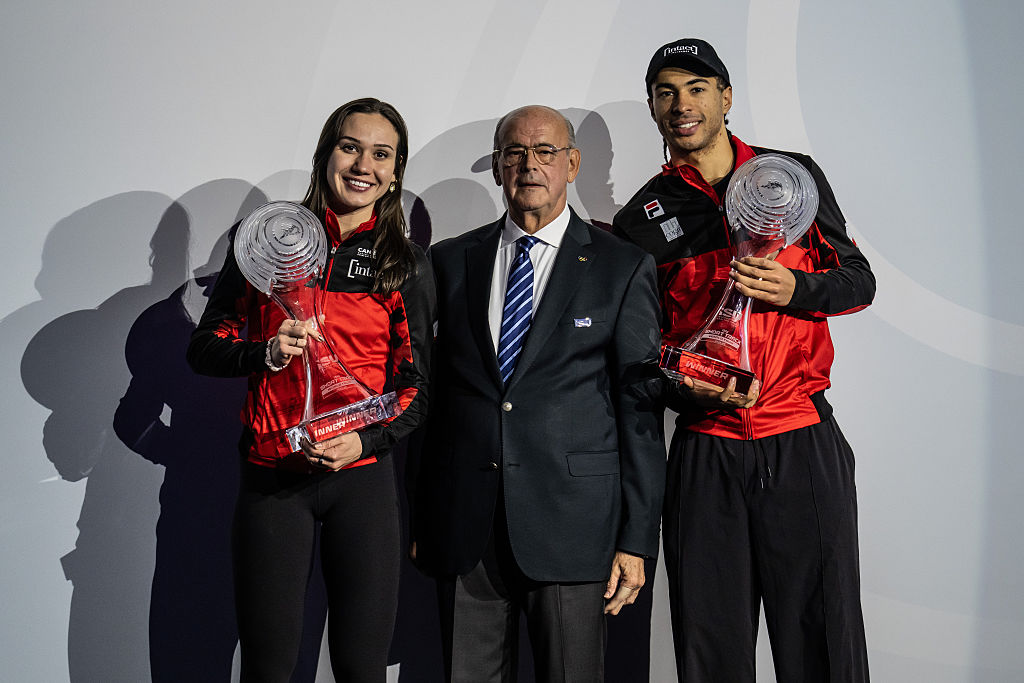
Courtney Sarault and William Dandjinou are presented with their 2025/26 ISU Crystal Globe trophies by ISU Representative Mr Stoycho Stoytchev. © ISU
Many commentators expected the Korean White Tigers to take the ISU Team Crystal Globe when it was introduced two seasons ago. Instead, the Ice Maples have won it back-to-back.
They are strong favourites to top the Olympic Short Track pile for the first time ever, with seven medals their magic target. Just how has this all happened?
Teamwork, teamwork, teamwork...
Canada have long had a fine training system, centred in Montreal, with a decent pool of mainly Quebec-based athletes to select from. Over the last quad, however, Canada’s management approach has been overhauled.
Leading the way has been Head Coach Marc Gagnon – a legendary skater with three Olympic gold medals – who joined the set up in 2021.
He partnered with assistant head coach, Frenchman Sebastien Cros, and each man is the ‘lead’ for six racers, although there is huge crossover between their work.
“My main objective was to improve as a team, because we're only going to be as strong as our weakest link,” says Gagnon on his philosophy.
“Sebastien builds the training programmes on the ice. We have the best programme on the planet, and I’m not going to mess with that.
“But we’ve got off-ice training, a nutritionist, psychologist, doctor, physios. We have nine staff and that is a lot of people to get on. My role is to make sure that all these people work well together so that the programme goes a certain way.
“They're professionals, and it’s important to respect their sphere. I'm not going to tell my psychologist what to do. I'm going to listen to what he tells me, what can help an athlete more. Was it done that way in the past? Not as much.
“I’ve seen unhappy staff and the negative vibe it was bringing. I really wanted to avoid that.”
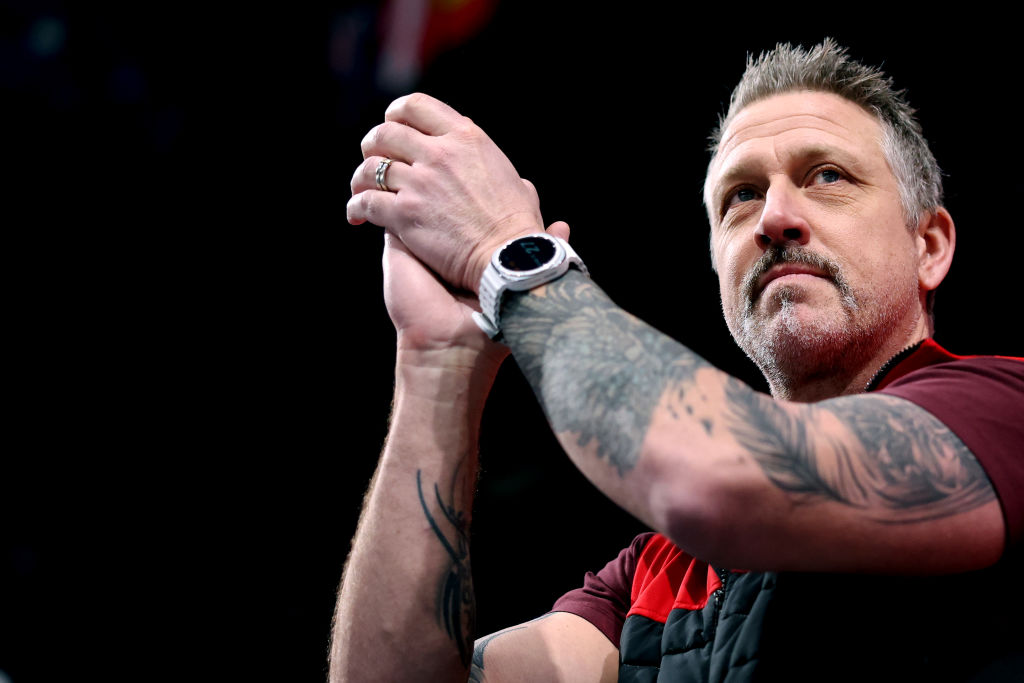
Head Coach Marc Gagnon watches on as his Canadian skaters put his training program into practice on the ice. © ISU
Beyond the relays, Short Track is an individual sport. But emphasis has been massively put on the collective.
“Everybody works together, we develop as a team. We want to push everyone up,” says Gagnon.
“We need to make less experienced skaters better, because they’re going to be better training partners. We started on that two summers ago.”
It is no coincidence that Dandjinou – one of the ‘weaker’ skaters who missed out on a place for Beijing 2022 – is now leading the way.
“Will is on top, but if he has a bad race and the atmosphere is negative, it could affect the next race,” says Gagnon. “If there are negative vibes, if nobody is there to support, it makes a difference.
“Will and Steven [Dubois] support each other, and I'm pretty damn sure that they all felt, when they had a bad experience, how nice it was to have everybody behind them. It's going to be positive at the Games. Hopefully we won't need it. But it will help if we do.”
The seven-medal target
Results have changed fast. “I was surprised how quickly they got the idea of being a team,” says Gagnon. “They all got into the rhythm of being there for each other, understanding they are teammates, training partners, competition partners. That everybody was important.
“Will is our strongest leader, but we also have other people, like Maxime [Laoun], who is a really vocal leader that people listen to a lot.”
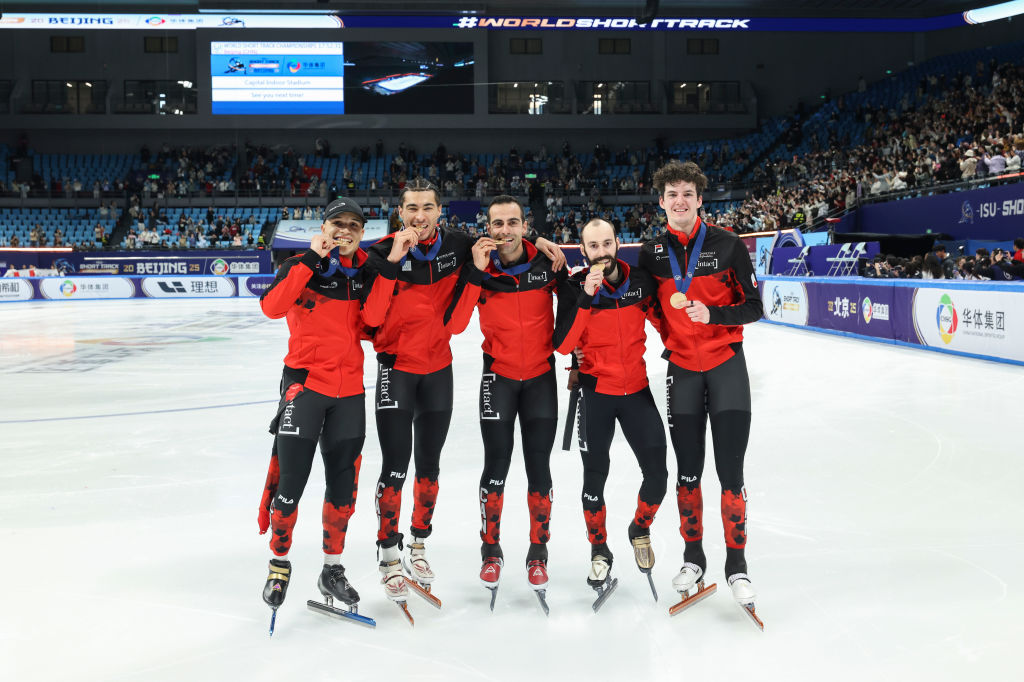
Pierre-Gilles, Dandjinou, Laoun, Dubois and Roussel celebrate becoming Men's 5000m Relay World Champions in Beijing (CHN) in March 2025. © ISU
This term, the most emphasis was put on securing the 21 available spots for the Olympics. “That was the main goal at the start of the year,” says Gagnon. “Since 1998, it has only happened once for Canada.”
Every point counted. “We were making sure that even if you’re in a repechage, you’re going to get points for the group, to get us there. We were not talking about the Globes. The 21 spots were our objective.”
The Globes were certainly a bonus, however. “We knew Will was capable of winning again,” says Gagnon. “I got surprised with Courtney. I knew she would be a big contender, but not that big, right away.”
Now the trophies have been secured under intense competition, that experience can be harnessed for Milan.
“It’s nice for Courtney, because what she has lived with the Globe will be close to the doubt and stress you get at the Games,” says Gagnon.
“For Will, he handles stress so well, he’s always focused on what he has to do. It's natural and it's going to serve him well.”
Both genders have their leaders. The men are more vocal, but Boutin and Brunelle are also loud voices. Sarault increasingly shares opinions (“she sees things well… she's starting to feel comfortable in that role”) and Dandjinou says that Sarault inspires him “every day.”

Florence Brunelle and Kim Boutin celebrate becoming World Mixed Relay champions - Team Canada won all three senior relay golds at this year's event. © ISU
Seven magical Milano medals at the Games, then, is the target. Why that number?
“The most that Canada has won is six,” says Gagnon. “Will we get to seven? I have no idea. People get nervous. Other teams get more aggressive. Anything can happen. It’s Short Track.
“I have no idea, but I wanted for them to understand how much we believe in them, how much we feel they can achieve as a group.
“I feel they can be the greatest we've ever had, and I want them to train towards that. So seven seemed like a good number. We don’t talk too much about where those medals would come from, because we don't know. But I want us to try.
“When I was skating, never did I think that I could win everything. But every freaking day, I was training towards it.”
Rivals and friends
Cros and Gagnon work separately yet closely. “We divided the athletes into groups where we thought we had the best fit,” he says. “They all have different personalities. We were trying to have six or seven athletes that we felt we could influence.
“Sebastian's a little bit more with the men, I’m a little bit more with the women. Will was doing super good with Seb, and Courtney switched from Seb to me, our personalities fitted together. But we help each other be better.”

Gagnon congratulates Sarault, Danae Blais, Brunelle and Boutin after winning the 3000m Relay on the ISU Short Track World Tour's Seoul (KOR) event in 2024. © ISU
The athletes certainly agree. “It’s a mentality,” says Felix Roussel. “We have the best coaches and athletes to train with. I have Steven, Will, Max, Jordan, and the younger guys. They push you every day. You can’t rest.
“It’s the same mentality we want at the Games. We want to break the record.”
Dandjinou’s attitude sets the tone. “Will is a great competitor, athlete and friend,” says Roussel.
“He doesn’t take the spotlight, it’s all about the team. He wants to win but he wants to do it with his friends. We push him every day. Some days he is not the best Canadian on the ice. It keeps him humble and working hard, and that’s why he’s the superstar he is right now.”
With such a mentality coursing through every member of Team Canada, they are going to take some stopping.